Tutorial Speakers

Tailor-made GAAFET development from scratch for the shared AIST R&D 300mm pilot-line using vertical and horizontal nano-processes
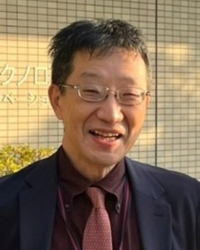
Dr. Yoshihiro Hayashi

Invited Senior Researcher
National Institute of Advanced Industrial, Science and Technology

Abstract
To strengthen international R&D competitiveness following up the structural paradigm shifts from planer to 3D-chanel FET such as GAAFET, a shared 300mm R&D pilot-line has been made in AIST from scratch based on the conventional 65 nm CMOS processes adding vertical and horizontal nano-processes. In this tutorial are reviewed the fundamental process flow and its difficulties for the GAAFET fabrication in reality, especially focusing on the layered Si-nanosheet channel fabrication with the Si/SiGe epitaxial growth, the selective SiP or SiGeB epitaxies on source/drain followed by the selective SiGe recess-etch and wet-cleaning, and high-k/metal GAA stacks with ALD, and etc.
CV
  • 1987: Ph.D. Applied Chemistry, Keio University.
  • 1987-2010: Central Research Laboratories, NEC for R&D on ULSI device/process integration.
  • 2010-2019: Renesas Electronics Corporation for RF device integration etc.
  • 2019-Present: Visiting Professor, Faculty of Science and Technology, Keio University as of a chairperson, System Devise Roadmap Committee of Japan (SDRJ).
  • 2020-Present: Advanced Semiconductor Research Center (SFRC), AIST for Technology management on“R&D Project of the Enhanced Infrastructures for Post-5G Information and Communication Systems” (JPNP20017), subsidized by NEDO

Fluid Mechanics of Liquid Exchange on Wafers and the Role of PVA Brushes in Post-CMP Cleaning

Dr. Toshiyuki Sanada

Professor
Shizuoka University

Abstract
Liquid exchange on wafer surfaces plays a crucial role in wet semiconductor processes, particularly in rinsing steps. This tutorial first introduces the fluid mechanics of thin liquid films on wafer surfaces, with a focus on the transport of trace-level contaminants. It then discusses post-CMP cleaning, where efficient liquid exchange is essential for removing residual particles. Special attention is given to the role of PVA brushes, highlighting their contribution not only through mechanical contact but also through enhanced fluid exchange induced by brush deformation. The insights presented aim to provide a better understanding of cleaning mechanisms and to support the design of advanced cleaning processes for the removal of trace-level contaminants.
CV
Toshiyuki Sanada received his Ph.D. in Mechanical Engineering from Kyushu University in 2005. He served as a Research Associate at Kyushu University from 2005 to 2007, and joined Shizuoka University as an Assistant Professor in 2007. From 2008 to 2009, he was a Visiting Associate at the California Institute of Technology. He is currently a Professor in the Department of Mechanical Engineering at Shizuoka University. His research focuses on dispersed multiphase flows, particularly the dynamics of bubbles and droplets. He has also worked on cleaning technologies for the semiconductor industry, with an emphasis on fluid mechanics.